AI assisted financial advisers, otherwise called robo advisers, have gathered remarkable acceptability in recent years, with some calling them entry level investment tools. By 2025, these AI enabled platforms will be nothing short of sophisticated. The current breed of AI systems aims at rendering a personalized investment strategy based on an individual’s market income, spending habits, long term goals, and even risk appetite. Unlike conventional financial advisers, who tend to impose high service charges or impose hefty account minimums, robo advisers charge a tiny fraction of the desk management services fee, thus rendering wealth management accessible to the average investor. The very fact that modern robo advisers learn and adapt on their own differentiates them. By using machine learning algorithms, they analyze huge streams of financial data. This includes information on market movements, global news, and economic trends in order to adapt portfolios in real time. This allows for the investment strategies employed to be consistently updated, actively managed, and relevant, especially during times of market uncertainty. Furthermore, many robo advisers incorporate holistic financial planning tools, such as retirement calculators, tax optimization strategies, and debt repayment strategies all the more important when capturing people in a marketplace or ready cash into this one stop shop for addressing personal finance matters. Accessibility via mobile apps and web platforms has struggled to democratize investment management, especially among the younger generations and novice investors that value convenience and low cost options.
Personalized Portfolio Management
These personalized growth portfolio strategies are nothing but wealth growth personalizations on their own. These include risk profile assessments during which some factors such as income and long term financial goals are considered. Unlike generalized investment schemes, these intelligent systems will shape these portfolios to reflect the unique circumstances of the investor. For example, a young professional risk tolerant might be encouraged towards equities type of assets while for a retiree, there would be a gentle nudge towards investments that take a more conservative stance, income generating in nature. What makes the AI advisor really exciting is the ability to mold itself dynamically with changes in life. In case the income went up or new expenses came into the budget or there were any changes like home purchases or savings for children's education, the AI would automatically readjust the portfolio according to changes. This flexible adjustment will always keep the financial plan aligned to that particular moment without the need for manual intervention. In addition to such parameters, also AI advisors take into consideration the conditions of current markets, economic indicators, and new trends regarding the portfolio allocations. In saying while the investments are indeed customized to one's individual goals, they are simultaneously optimized in real time for sudden changes in external markets. The result is a seamless, hands free investment experience, as though a human advisor were actively managing your portfolio through every single one of those steps.
Why AI is a Game Changer
AI in financial advising holds one major advantage: an absence of human emotion. Impulsive human investors are sometimes swept by fear, greed, or stress when AI is completely objective, processing enormous streams of market data in real time, scanning global indices, commodities, currencies, and emerging trends in seconds. It allows AI to measure opportunity and risk across the vast market landscape and give recommendations based solely on this data. With no need for rest, it makes its own case as an invaluable partner in picking out potentially profitable moves that may be missed by human advisors. Beyond individuals, AI based financial advising could very well extend into collaborative financial ecosystems. Like SplitMate could become some platform on which friends or peers can manage joint expenses together and pool up funds for joint savings and investments. The integrated AI advisor could then guide the group on where to invest their pooled capital, weighing safety against potential growth. Friends on the road saving for holidays, some start up fund, long term investments, and so on the customized advice could provide insight into how their collective wealth growth: finance could become that much more inclusive, social, and effective. Such innovations would democratize wealth creation, introduce new transparent means of finance, and build a bridge over the traditionally exclusive world of financial planning for communities and smaller groups, thus opening a new paradigm of group-oriented financial intelligence.
At some point, SplitMate may develop further to offer an AI advisor for joint savings and investments of a group of friends, providing insights to grow their shared capital efficiently.
Stay Updated with Cenvexa
Get the latest insights on personal finance and money management delivered to your inbox.
Subscribe to Our NewsletterYou might also like

AI in Regulatory Technology (RegTech): Smarter Compliance for Finance
Arpan Paul
September 20, 2025
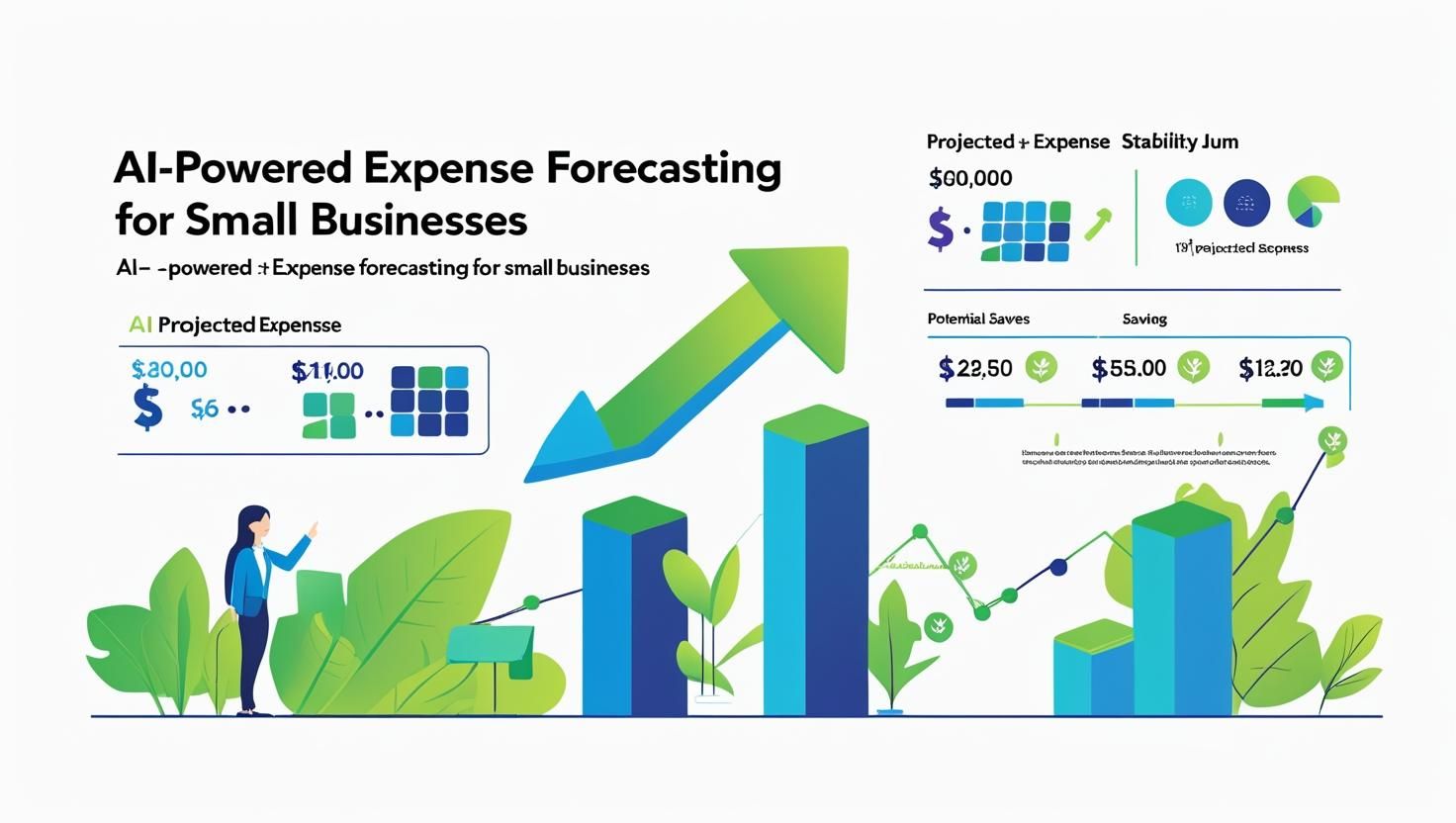
AI Expense Forecasting for Small Businesses
Arpan Paul
September 20, 2025

AI-Powered Fraud Detection: How Banks are Staying Ahead in 2025
Arpan Paul
September 20, 2025